The Cannonball HouseExhibits
settings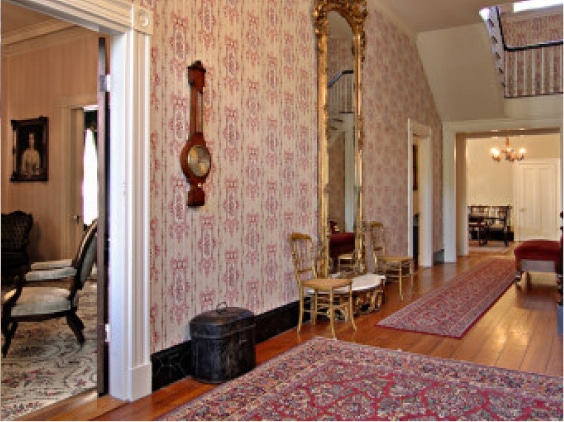
Main Foyer
Stepping into the home, visitors are transported to the mid-19th century, immediately noticing the twelve-foot ceilings and period-appropriate furnishings. The foyer features reproduction 1850s wallpaper and a towering 36-inch pier mirror that stretches from floor to ceiling. A leaning grandfather clock stands beside an 1850s rosewood square grand piano, while matching rugs accent the heart-pine floors.
Front Parlor
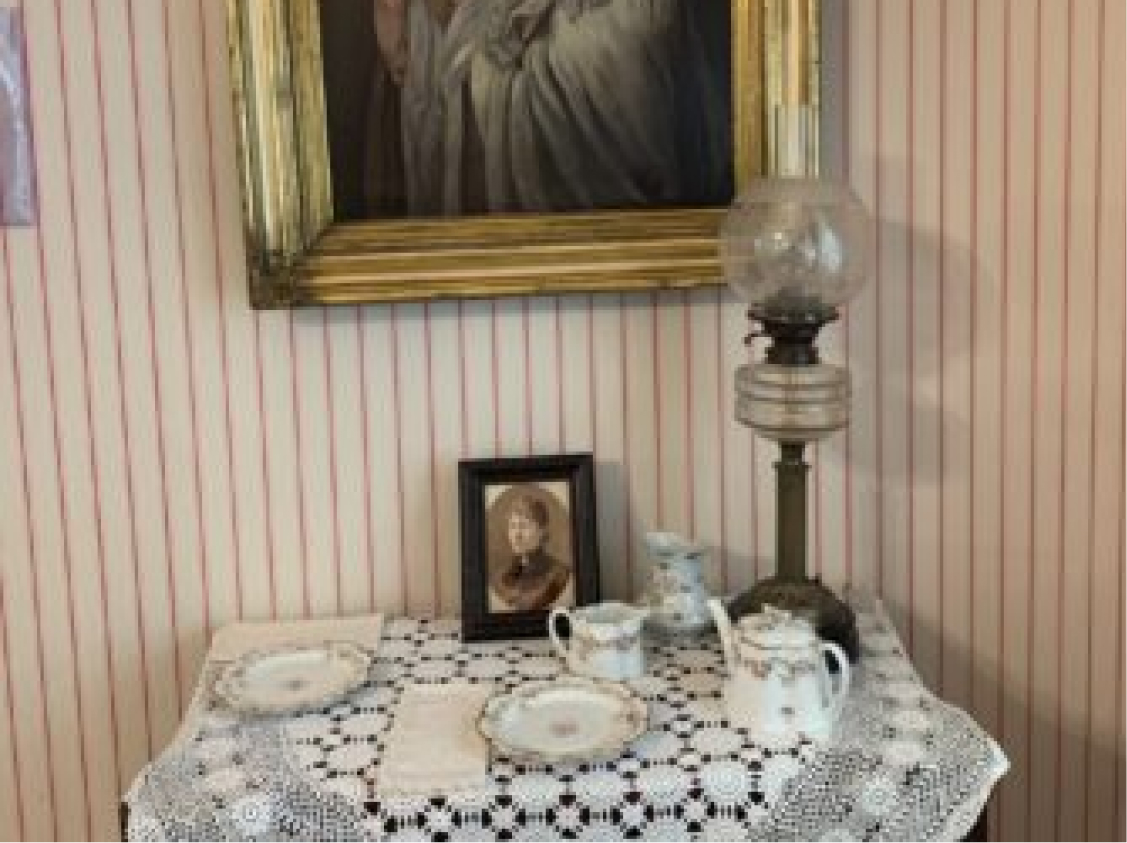
The landscapes and portraits displayed in this room are all the work of Miss Lizzie Canning, daughter of the home’s second owner, Charles Canning. Lizzie became a student of Macon’s Wesleyan Female College at 18, spending eight years at the college, studying charcoal, oil, pastel, and crayon.
Ladies’ Bedroom
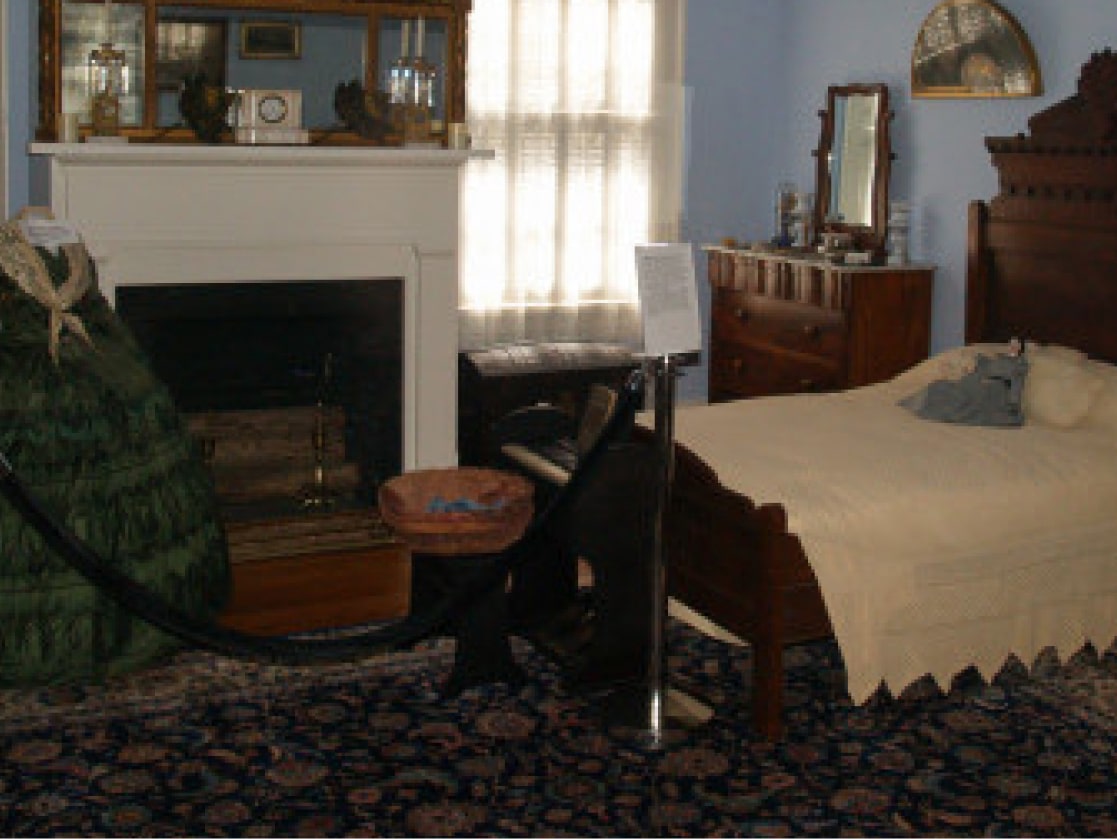
Decorated in a more feminine style, the Ladies’ Bedroom features a modest bed topped with a hand-tatted coverlet and walls adorned with ornate hand fans that reflect their everyday use. A wardrobe and chest of drawers, accompanied by a silver mirror and brush set, form part of the room’s furnishings. Visitors can also learn about period mourning customs through the intricately woven hair wreath on display. A hand-cranked sewing machine and table illustrate the tools that helped simplify household work.
Judge Asa Holt’s Room
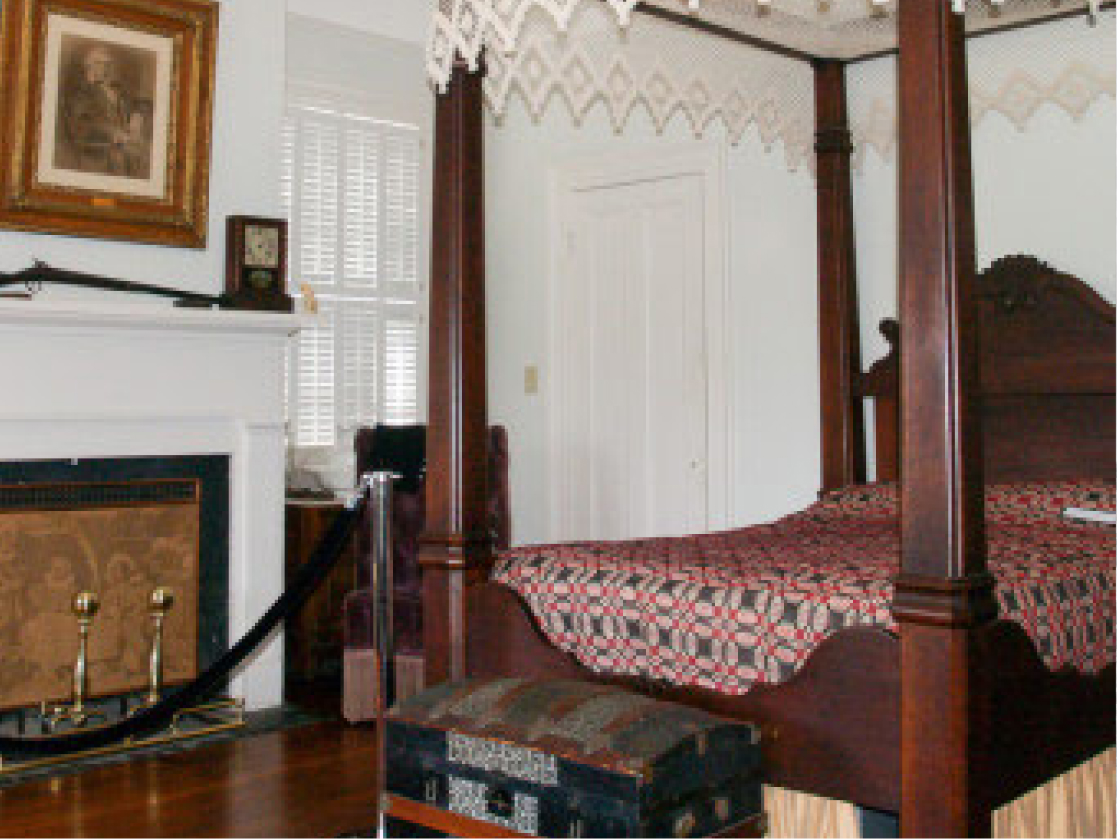
Most of the furnishings in this room belonged to the Holt family and date to the mid-19th century. A large bureau stands alongside a finely crafted chest of drawers and a marble-top table with chairs, forming part of the room’s period decor. The windows overlook downtown Macon and offer visitors the opportunity to trace the path of the artillery shell that struck the home in 1864.
The Formal Dining Room
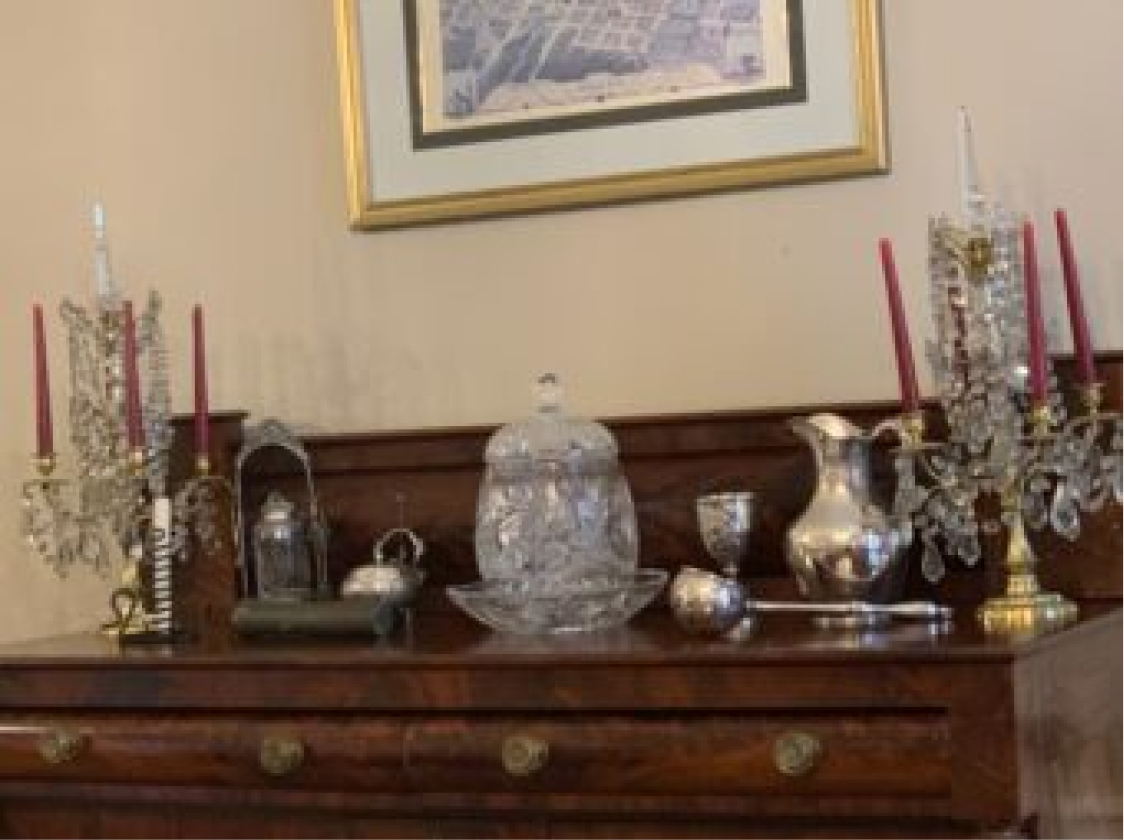
Descending the stairs toward the rear of the house, visitors enter the formal dining room, where ornate artworks hang along the walls, and the long dining table is arranged with silver serving pieces and displays. A crystal churn with its original lid is featured alongside a sterling silver pitcher and dipper, items that survived the Union invasion after being carefully buried for safekeeping.
Back Parlor
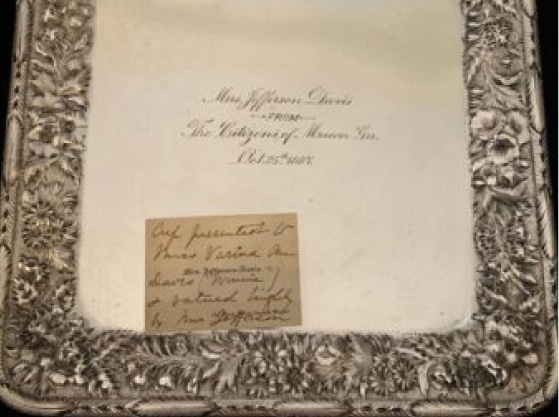
Artworks in this room include a portrait of Alexander Hamilton Stevens, a former Governor of Georgia and the only Vice President of the Confederate States of America, and of Judge Eugenius Nesbit, a Judge of the Superior Court, Georgia State Senator, and US Representative from Georgia. A silver calling-card tray in the room was gifted to Varina Davis, First Lady of the CSA, during the Davis’ visit to Macon in October 1887, for a Confederate reunion.
Brick Kitchen and Servants’ Quarters
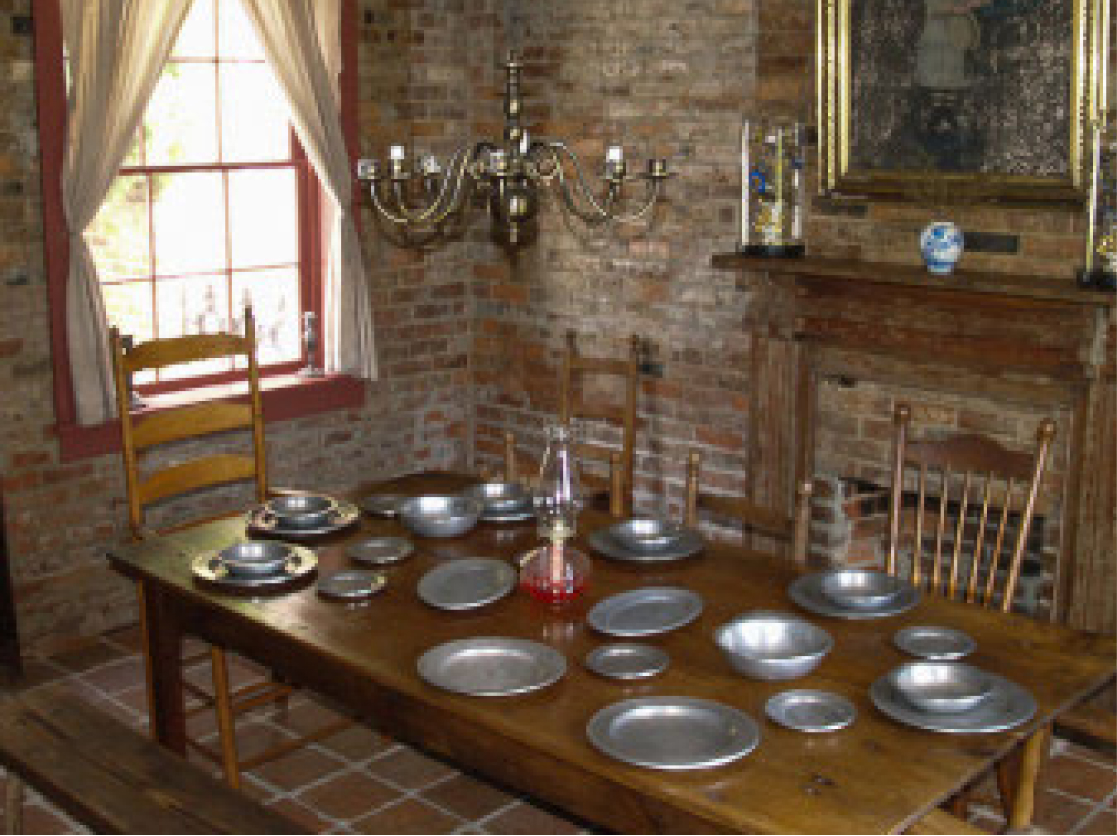
Just a few short steps behind the house, the home’s original brick kitchen and servants’ quarters contain numerous artifacts that help modern audiences understand the daily lives of families in the antebellum South. A special exhibit features a spinning wheel, weasel, cotton combs, and a sample of unseeded cotton, telling the story of yarn production and weaving.
Gardens
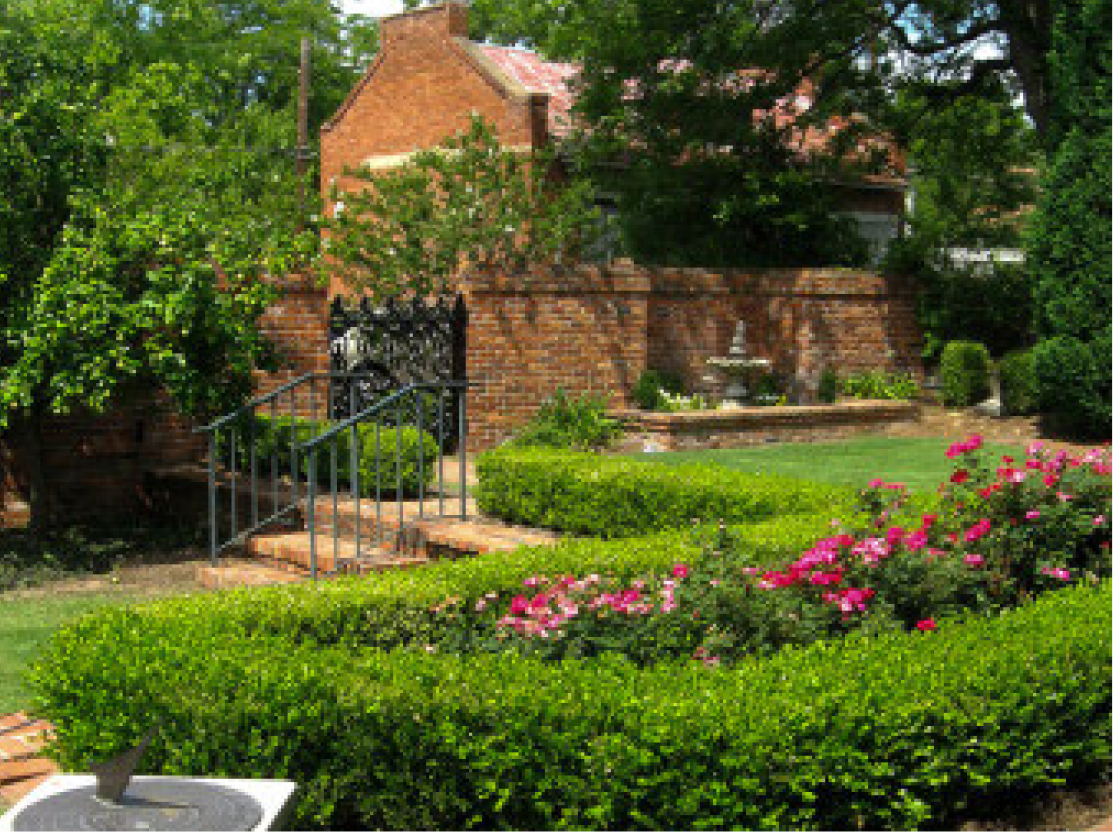
The Gardens at the Cannonball House are in bloom almost year-round. The sunken garden is representative of a classic English garden, a style brought to America by early settlers. It is paired with an herb-and-vegetable garden and several historical artifacts, including a bronze cannon and a railing from which Jefferson Davis once addressed the people of Macon.
Special Collections
These standing exhibits are supplemented by our many special collections of historical artifacts from the antebellum, Civil War, and Reconstruction eras.